
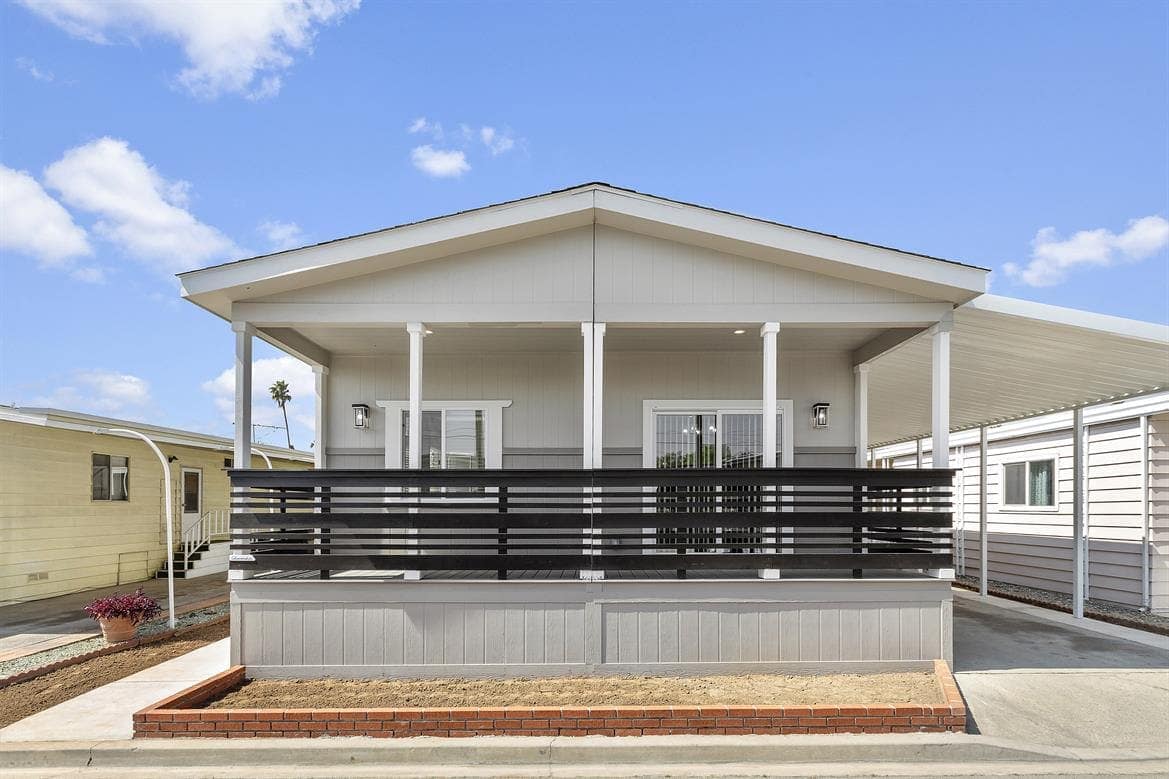
Housing in Southern California is expensive, and many people in Los Angeles County and Orange County are looking for something between a crowded apartment and a house that stretches the budget. Manufactured housing communities sit in that middle ground. They offer a home with its own entrance and driveway, set inside a managed neighborhood with shared amenities, and you can either own the home or rent it.
That arrangement has real advantages, and it also comes with trade-offs that are easy to miss if you only look at the price of a home. This guide covers the main perks, what differs between Los Angeles County and Orange County, and what to check before you commit, so you can decide whether this kind of community fits your life.
What a Manufactured Housing Community in Southern California Actually Is
A manufactured home is a house built in a factory and installed on a site, usually in a community of similar homes. Modern manufactured homes are built to federal construction and safety standards that HUD’s Office of Manufactured Housing Programs enforces, which sets them apart from the older “trailer” image many people still have in mind.
Communities generally work in one of two ways. In some, residents own their home and pay monthly rent for the site it sits on. In others, the community owner also provides the home, and residents rent both together. Some communities are open to all ages, while others are restricted to residents 55 and older, so confirm which type you are looking at.
Eight Benefits of Manufactured Housing Communities in Los Angeles and Orange County
1. A more attainable path to a home of your own
Single-family home prices in Los Angeles and Orange County are among the highest in the country. Buying a manufactured home in a community can be a more attainable way to own, since you are buying the home rather than the land. Prices vary widely by community, age, and size, so compare current listings in the areas you are considering.
2. The option to own or rent
Not everyone wants to buy, and not everyone should. Because communities offer both homes for sale and homes for rent, you can choose based on your budget, your timeline, and how long you plan to stay.
3. Privacy without shared walls
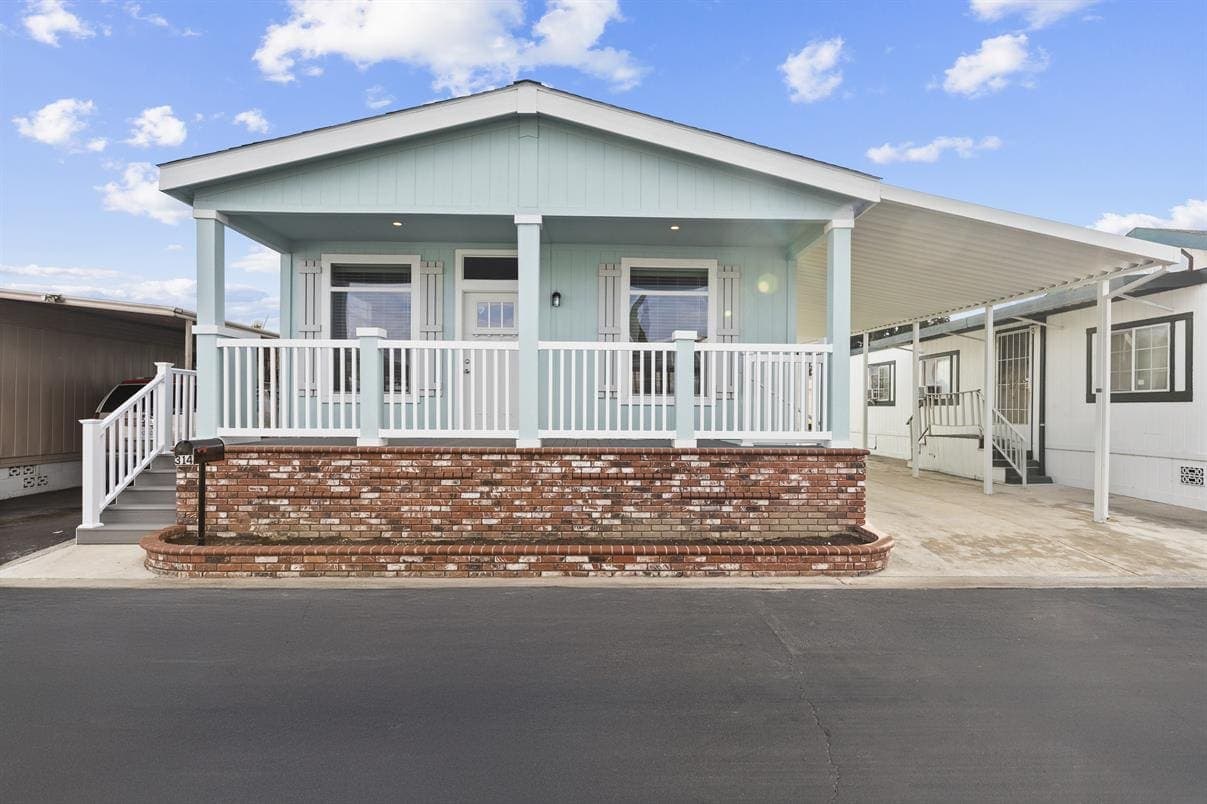
Manufactured homes stand on their own, typically with no shared walls, no stacked units, and no shared hallways. Most have a private entrance and driveway parking, and many have a porch, patio, or small yard. For anyone who has dealt with noisy neighbors or hunted for parking, that difference is significant.
4. Amenities you can use year-round
Many communities include amenities such as a pool, clubhouse, playground, dog park, or barbecue area. Southern California’s mild climate means outdoor spaces like these are usable for much of the year, adding real value compared with a home with no shared recreation at all.
5. Professional management and maintained common areas
Most communities have on-site management that takes care of the streets, landscaping, and shared facilities. That means you spend less time on exterior upkeep than you would in a standalone house, and you have a specific person to contact when something shared needs attention.
6. California legal protections for residents
California has a dedicated law for these communities, the Mobilehome Residency Law. According to the state’s Department of Housing and Community Development guide to the law, residents are entitled to written disclosures before buying, at least 90 days’ written notice of a rent increase, written park rules, and access to shared facilities at reasonable posted hours. Homeowners also have the right to at least one pet, subject to reasonable rules. These protections are a meaningful part of the deal, and they apply statewide.
7. Established neighborhoods with convenient access
Many communities in both counties are located in established neighborhoods near freeways, shopping, and schools. In a region where commute length shapes daily life, location can matter as much as the home itself, so check how each community fits your routes to work.
8. A built-in sense of community
Because neighbors share streets, facilities, and often events, many residents find these communities friendlier than a large apartment complex. That is hard to measure, but a weekend afternoon visit tells you a lot about the atmosphere.
Los Angeles County vs. Orange County: What to Check in Each
The perks above apply across Southern California, but the details change from city to city. Both counties include dozens of separate cities, and local rules differ from one to the next. When you compare communities in Los Angeles County and Orange County, pay attention to:
- Local rent stabilization. HCD notes that state law does not set the amount of space rent, and roughly 100 California cities and counties have their own rent control ordinances. Whether a given space is covered depends on local rules, so ask the community directly.
- Age restrictions. Both counties have all-age communities and 55+ communities. Confirm the policy before you tour.
- Commute and transit. Look at freeway access and travel times to your workplace at the hours you would actually travel.
- Community size and amenities. A small community with a clubhouse and pool feels very different from a large one with multiple facilities.
Trade-Offs to Weigh Honestly
Manufactured housing communities are not the right fit for everyone, and a good decision includes the downsides:
- Space rent is a separate, ongoing cost. If you buy a home, you typically still pay monthly rent for the site, and it can increase with proper notice. Add it to the home’s price when you budget.
- Utilities are usually billed separately. Ask what the typical monthly utility costs are for the specific home.
- Financing can work differently. A home on leased land may not qualify for a traditional mortgage. Talk to a lender experienced with manufactured homes early to learn your options.
- Community rules apply. Rules about pets, parking, guests, and exterior changes are common, and improvements usually need approval. Read them before you commit.
- Your choice of location is narrower. There are fewer manufactured home communities than apartment buildings, so you may have fewer neighborhoods to choose from.
How to Evaluate a Community Before You Commit
- Confirm whether the community is all-age or 55+.
- Ask for the current space rent in writing, and how and when it can change.
- Ask whether the space falls under a local rent control ordinance.
- Request the disclosure documents and the written community rules.
- Estimate your total monthly cost, including space rent, utilities, and any other fees.
- Visit the pool, clubhouse, and laundry facilities in person, and ask about their hours.
- Test the commute from the community to your workplace at rush hour.
- Speak with a lender about financing before you shop seriously.
Frequently Asked Questions
Are manufactured homes in Southern California safe and built to code?
Manufactured homes are built to federal HUD construction and safety standards, which HUD enforces through its Office of Manufactured Housing Programs.
Do I own the land if I buy a manufactured home in a community?
Generally, no. In most communities, you own the home and rent the site it sits on, which is why space rent is an important part of your budget.
Is renting or buying a manufactured home better?
It depends on your budget, how long you plan to stay, and how much flexibility you want. Renting avoids the upfront cost of buying and gives you more flexibility to move, while buying gives you ownership of the home. Compare total monthly costs for both.
Are most manufactured housing communities in Southern California for seniors only?
No. Both Los Angeles County and Orange County have all-age and 55+ communities, and the rules differ by community, so confirm the policy for each one you consider.
What is the Mobilehome Residency Law?
It is the California law that governs the relationship between residents and the owners of manufactured home communities. It covers disclosures, rent increase notices, park rules, and access to shared facilities.
Where can I get help if I have a question about my rights?
HCD’s Mobilehome Assistance Center can provide information and referrals at (800) 952-5275 or MHassistance@hcd.ca.gov. Disputes under the law are generally civil matters, so for legal questions, speak with a licensed attorney.
Looking for a Manufactured Housing Community in Southern California?
If you are searching for a manufactured housing community in Southern California, Advantage Management Inc. (AMI) manages communities across Orange County and Los Angeles County, and our team is happy to answer questions about homes, costs, and availability. You can browse our current manufactured homes for sale and manufactured homes for rent at any time.
At Palm Lodge Mobile Home Estates in Anaheim, we have manufactured homes for rent. At Holiday Mobile Home Estates in Santa Ana and Kings Way Gardens Mobile Home Estates in La Verne, we have manufactured homes for sale. To see a home in person, contact us to schedule a tour.
Recent Comments