
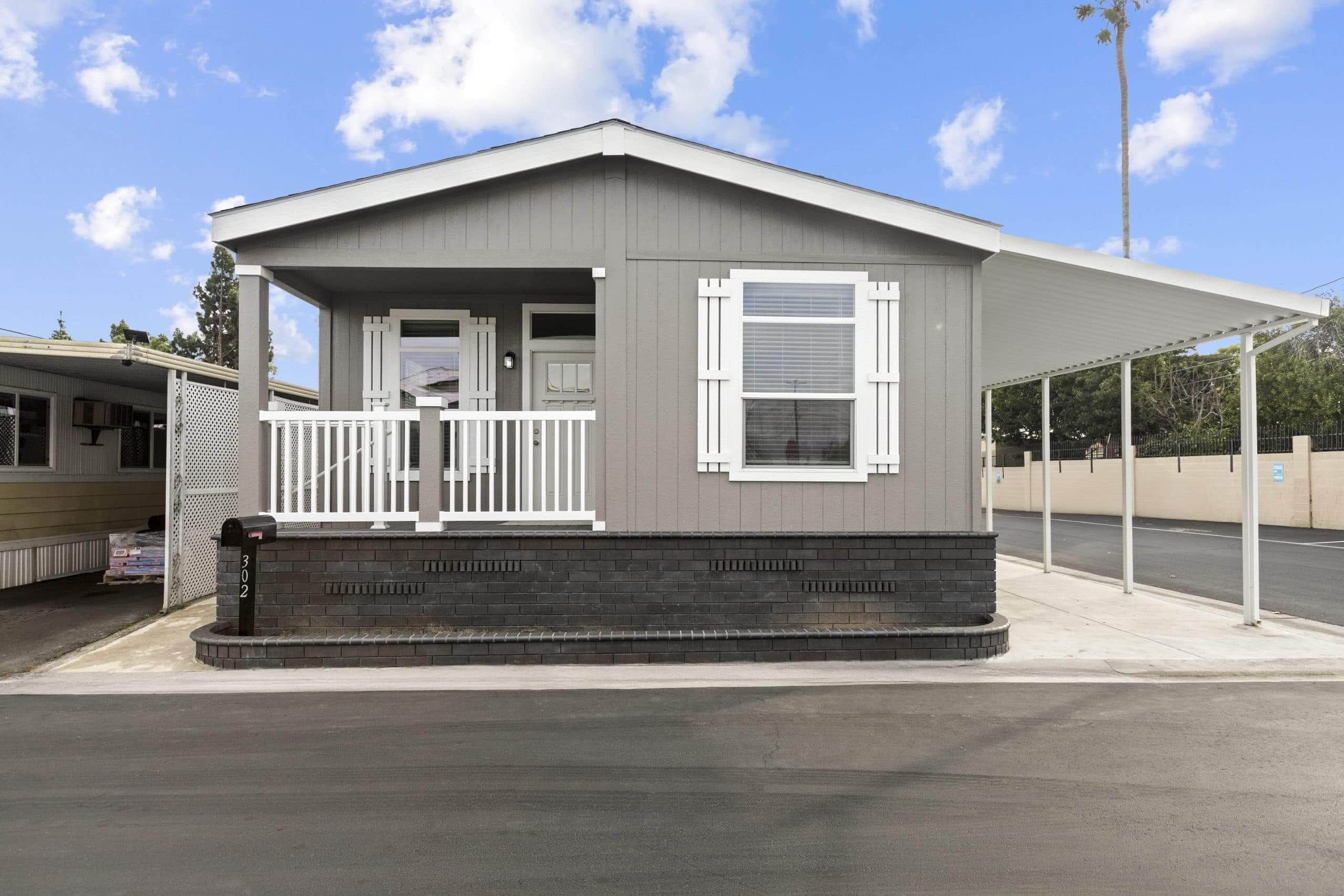
One of the quiet advantages of living in a manufactured home is that your front door opens to the outdoors. There is no shared hallway, and many homes come with a porch, a patio, a small yard, or a driveway that can double as extra living space. In Southern California, where the weather lets you spend a large part of the year outside, even a modest lot can become a place you actually use.
The catch is that outdoor projects in a manufactured home community follow different rules than a typical house. Lots are compact, homes sit close together, and California has safety and permit requirements for things like awnings, decks, and sheds. This guide covers outdoor space in a manufactured home: easy ideas you can start with, water-wise landscaping, which projects need permits and approval, and how to plan so your project goes smoothly.
What Outdoor Space You Usually Get in a Manufactured Home Community
The exact setup depends on the community and the home, but most residents have some combination of the following:
- A porch or entry area at the front door.
- A patio, deck, or side area next to the home.
- A small yard or planting area, often at the front or side of the lot.
- A driveway or carport, which can also work as a flexible outdoor space when it is not in use.
- Shared community spaces, such as a pool, clubhouse, playground, dog park, or barbecue area, in communities that offer them.
Because private lots are small, the goal is usually to use every foot well rather than to add more square footage. That is where planning pays off.
Easy Ways to Upgrade Your Outdoor Space Without Construction
Start with changes that do not involve building anything. They are the fastest, least expensive way to make a space feel finished, and they are generally easy to undo if you move. Check your community rules first, but these ideas usually stay on the simple side.
Use containers and vertical planters
Pots, planter boxes, and wall-mounted or hanging planters add greenery without digging or committing to a permanent bed. They work well on porches and patios, and you can rearrange them as the seasons change. Herbs, succulents, and flowering plants all do well in containers in a mild climate.
Create zones with furniture
A small space feels larger when each area has a purpose. A compact bistro set can define a dining spot, while two chairs and a side table can create a reading corner. An outdoor rug helps mark each zone and makes a patio feel more like a room.
Add light the safe way
Solar string lights, battery lanterns, and solar path lights add ambiance without wiring. For anything powered, keep safety in mind. HCD’s resident guidance says extension cords cannot substitute for permanent wiring, so a lasting electrical project should be done with the proper permit and a licensed electrician.
Plan your shade
Shade makes a patio usable on warm afternoons. A freestanding umbrella is the simplest option. Anything that attaches to your home or becomes a permanent structure is a different matter, because awnings and similar structures need a permit, as explained below.
Keep pets in mind
If you have a dog, think about where they will spend time outside. HCD’s guidance notes that domestic animals should not roam free in the park and that the lot should be kept reasonably clear of animal waste. Ask management about fencing and pet rules before you build a pet area.
Water-Wise Landscaping for Southern California
If you have a planting area, choose plants that suit the climate. The Metropolitan Water District of Southern California, in its quick tips for a California Friendly and native garden, recommends a plant palette of California Friendly and native plants with moderate to low water needs. Its tips also include grouping plants with similar sun and water requirements and keeping a 2- to 3-inch layer of mulch in plant beds to limit evaporation.
A few practical points for a manufactured home lot:
- Keep the area around the home clear. HCD’s inspection guidance calls for removing leaves, dry grass, and other combustible debris from under and around the home, so trim and clean up regularly.
- Choose low-maintenance plants. Native and drought-tolerant plants save time and water.
- Check what you are allowed to plant. Some communities have landscaping guidelines, especially for trees and front yards.
Outdoor Projects That Need Permits and Approval
This is the part many residents miss. According to HCD’s Mobilehome Park Maintenance Inspection resident booklet, installing, building, or altering any accessory building or structure, including porches and awnings, requires a permit from the enforcement agency. That agency is HCD, or in some areas the city or county that has taken over local enforcement. The same applies to electrical, plumbing, and gas equipment, and to storage cabinets over 120 square feet.
In practical terms, that means you should get a permit and community approval before building or changing any of these:
- Awnings and carports, including enclosing them. Awning enclosures are permitted for outdoor recreational use only and must be freestanding, not attached to the home.
- Decks, porches, and landings. In an HCD-regulated park, a deck landing larger than 12 square feet needs a permit.
- Sheds and storage cabinets. 120 square feet is the number to know: HCD requires a permit for storage cabinets above it, and its inspection checklist looks at the combined area of all storage cabinets on a lot. Sheds also have to meet setback rules.
- Room additions such as cabanas.
- Outdoor electrical, gas, or plumbing work, including a permanent outdoor kitchen or built-in appliances. HCD notes that appliances outside the home must be protected from the weather in an enclosure, and being under an awning is not enough.
Setbacks matter as much as permits. In general, combustible accessory structures need to stay at least 3 feet from the lot line and at least 6 feet from combustible structures on an adjacent lot, with some exceptions. Fire hazard areas can bring stricter construction standards, so ask the enforcement agency whether your park is in one before you plan a project.
In addition to the permit, the community itself usually has to approve improvements. According to the state’s Department of Housing and Community Development guide to the Mobilehome Residency Law, improvements generally require park approval and the proper permits, so ask management before you hire anyone.
If you rent your home, the community owns the structure, so exterior changes usually need written permission. Owners handle the permits and approvals themselves.
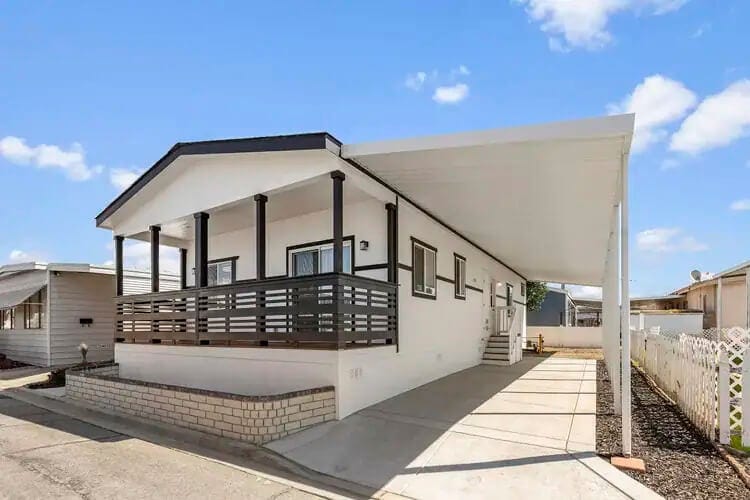
Safety Basics for Porches, Decks, and Stairs
If your outdoor space includes steps or a raised deck, HCD’s guidance gives a useful checklist of what inspectors look for:
- Guardrails on porches or decks that are 30 inches or more above grade. New guardrails should be 42 inches high, with openings small enough that a 4-inch sphere cannot pass through.
- Stairs that are safe and stable, with risers no taller than 7 3/4 inches and treads at least 10 inches deep.
- Handrails on stairways with four or more risers.
- Exit doors that open freely, with nothing blocking them.
- Structures that are sound, with supports that are anchored and in good repair.
For anything structural, use a licensed contractor who knows the manufactured home permit process.
Using Shared Outdoor Spaces
Your private space is only part of the picture. Many communities include shared amenities such as a pool, playground, dog park, or barbecue area, which can give you room to host or exercise that your lot cannot. California law requires common facilities to be available at reasonable hours, with the hours posted, so check when you can use them. Treat the amenities as part of your outdoor space when you compare communities.
A Quick Checklist Before You Start a Project
- Read the community rules about exterior changes, plants, fencing, and pets.
- Ask management whether the project needs written approval.
- Find out which agency issues permits for your park, HCD or the local city or county.
- Confirm setbacks from your lot line and from neighbors’ structures.
- Ask whether your park is in a fire hazard area with extra construction rules.
- Hire a licensed contractor for any structural, electrical, or gas work.
- Choose plants that suit Southern California’s climate and your sun exposure.
- Keep the area around your home clear of dry debris and combustible storage.
Frequently Asked Questions
Do I need a permit to add a deck or awning to my manufactured home?
Generally, yes. HCD’s guidance says installing or altering any accessory structure, including porches and awnings, requires a permit from the enforcement agency. You will also usually need approval from the community.
Can I put a shed in my yard?
Often, but with limits. HCD requires a permit for storage cabinets over 120 square feet; its inspection checklist considers the combined area of all storage cabinets on a lot, and sheds must meet setback rules. Check your community rules too.
Can I enclose my awning or carport?
Awning enclosures are permitted for outdoor recreational use only, and they must be freestanding rather than attached to the home. They also require a permit and community approval.
What is the easiest way to improve a small patio?
Start with containers, an outdoor rug, a compact table and chairs, and solar lighting. These changes do not involve construction and are easy to rearrange or take with you.
Who issues permits for manufactured home communities?
HCD is the enforcement agency for mobilehome parks unless a city or county has taken over local enforcement. Ask your community or your city’s building department which agency covers your park.
Can renters change the outdoor area of a rented manufactured home?
Only within what the lease and the community allow. Because the owner owns the home, permanent changes usually need written permission. Removable items like plants, furniture, and lighting are the simplest option.
Looking for a Manufactured Home With Room to Enjoy the Outdoors?
Advantage Management Inc. is a family-owned company with more than 50 years of experience managing manufactured home communities across Orange County and Los Angeles County. Whether you want to rent or buy, our team can help you find a home with a porch, patio, or yard of your own. Browse our current manufactured homes for rent and manufactured homes for sale, or ask which homes have the outdoor space you want.
Ready to find a home with space to enjoy the outdoors? Explore our homes for rent in Anaheim, homes for sale in Santa Ana, or homes for sale in La Verne, then reach out to schedule a tour and see the porch, patio, and yard for yourself.
Recent Comments