
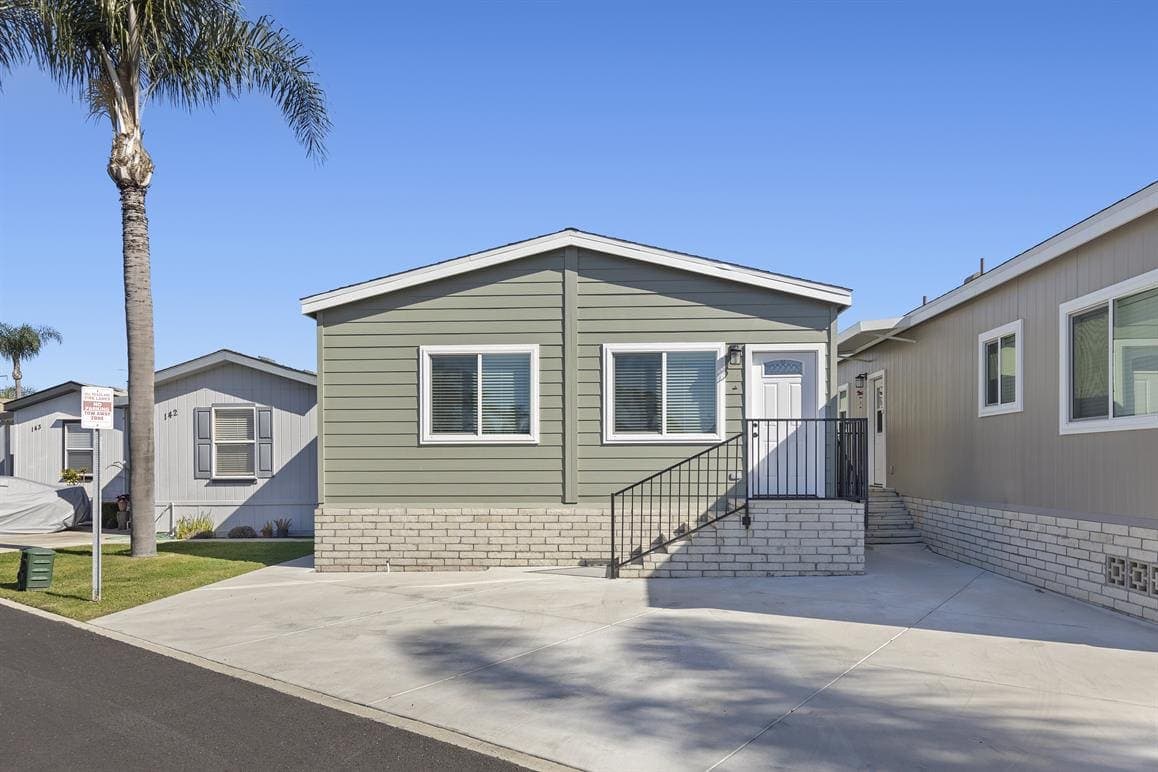
Few housing decisions feel as personal as whether to rent or buy. In Southern California, where the cost of a traditional house keeps many people on the sidelines, manufactured homes add a third path. You can rent a manufactured home the way you would rent an apartment, or you can buy one and rent only the site it sits on. Each choice comes with different costs, responsibilities, and freedoms.
This guide explains how renting vs. owning a manufactured home works in practice, what each option really costs, how financing and California law fit in, and which questions are worth answering before you commit. The goal is not to push you toward one answer, but to help you pick the one that fits your budget, your timeline, and your priorities.
What Renting vs. Owning a Manufactured Home Actually Means
A manufactured home is a house built in a factory and installed on a site, usually inside a community of similar homes. Modern manufactured homes are built to federal construction and safety standards that HUD’s Office of Manufactured Housing Programs enforces, so the choice between renting and owning is about your finances and lifestyle, not about the quality of the home type itself.
The two options work differently:
- Renting: The community owner provides the home and the site, and you pay rent for both. You sign a lease, pay utilities, and the owner remains responsible for the home.
- Owning: You buy the home, but in most communities you do not own the land underneath it. You pay monthly rent for the site, called space rent, and you are responsible for the home itself.
That second point surprises many first-time buyers. Owning a manufactured home in a community isn’t the same as owning a house on its own lot, and that difference shapes almost every cost and decision that follows.
The Costs of Renting a Manufactured Home
Renting keeps your upfront costs low and your monthly bill predictable. A typical budget includes:
- Monthly rent for the home and the site together.
- Utilities, which are often billed separately from rent. Ask which ones you would pay.
- Move-in costs, such as an application fee and a security deposit.
- Renters insurance, which covers your belongings and liability.
Because the community owner owns the home, the owner typically handles major repairs. That makes renting a good fit if you want housing costs you can plan around without taking on the risk of an expensive repair.
The Costs of Owning a Manufactured Home
Owning gives you equity in a home of your own, but the cost picture has more moving parts:
- Purchase price and down payment, plus closing and transfer costs.
- Loan payments, if you finance the purchase.
- Space rent, which you pay every month in addition to any loan payment.
- Utilities, which are usually billed separately.
- Insurance that covers the home itself, not just your belongings.
- Taxes or fees. According to the state’s Department of Housing and Community Development (HCD) guide to the Mobilehome Residency Law, registered owners pay either annual fees to HCD or annual property taxes, depending on how the home is classified.
- Maintenance and repairs, which are your responsibility as the owner.
Space rent deserves special attention. It can increase over time, and in a region with many separate cities, whether a local rent control ordinance applies depends on where the community is located. HCD notes that state law does not set the amount of space rent, and roughly 100 California cities and counties have their own ordinances. Ask the community directly.
Renting vs. Owning a Manufactured Home at a Glance
| Factor | Renting | Owning |
|---|---|---|
| Upfront cost | Lower: typically a deposit and application fee | Higher: down payment, closing, and transfer costs |
| Monthly costs | Rent plus utilities and renters insurance | Space rent, loan payment if financed, utilities, and insurance |
| Repairs and maintenance | Typically handled by the community owner | Your responsibility |
| Flexibility | Easier to move when your lease allows | Selling the home takes time and effort |
| Equity | None | You own the home itself |
| Customization | Limited by the lease | More freedom, though improvements usually need community approval |
| Land | Not yours | Usually leased, not owned |
Financing and Paperwork if You Buy
Financing a manufactured home can work differently from financing a traditional house. A home on leased land may not qualify for a conventional mortgage, and options can include chattel loans or FHA or VA-backed loans, depending on your financial profile and how the home and land are structured. Speak with a lender who works with manufactured homes before you start shopping seriously.
California also gives buyers specific protections. HCD explains that a buyer is entitled to a transfer disclosure form from the seller about the condition of the home and to disclosure documents from the community, which cover rents, fees, and park conditions. After the sale, the buyer should receive a signed copy of the certificate of title and must register the home with HCD to become the registered owner.
Your Rights Whether You Rent or Own
California’s Mobilehome Residency Law covers people who live in manufactured home communities, and the protections differ a little depending on your situation. Per HCD, homeowners paying space rent are entitled to at least 90 days’ written notice of a rent increase, written community rules, and the right to at least one pet, subject to reasonable rules. Common facilities such as pools and community rooms must be available at reasonable hours, with the hours posted. People who rent the home itself are also covered by the law’s resident provisions and keep the rights tenants have in other types of housing.
Which Option Fits Your Situation?
Renting may fit if you:
- Want lower upfront costs and a predictable monthly payment.
- Are not sure how long you will stay in the area.
- Would rather not be responsible for repairs and upkeep.
- Are still building savings or credit for a future purchase.
- Want to experience a community before committing to buy in it.
Owning may fit if you:
- Plan to stay for several years and want to put money into a home of your own.
- Have the savings for the purchase and can qualify for financing.
- Want more freedom to personalize your home.
- Are comfortable handling maintenance and budgeting for repairs.
One caution about owning: because you do not own the land, the home’s value depends heavily on its condition and the community around it, and it may not appreciate the way a house on its own lot can. Treat ownership as a way to build a stable, affordable place to live, and be cautious about counting on a large resale gain.
Questions to Ask Before You Decide
- What is the total monthly cost of renting, including utilities and insurance?
- What is the current space rent for homes that are for sale, and how can it change?
- Is the space covered by a local rent control ordinance?
- What are the lease length and renewal terms for rentals?
- What financing options are realistic for my situation?
- What do the community rules say about pets, parking, guests, and exterior changes?
- Who is responsible for repairs, and how are maintenance requests handled?
- How long do I realistically plan to live here?
Frequently Asked Questions
Is it cheaper to rent or own a manufactured home?
It depends on the home, the community, and how long you stay. Owning usually costs more upfront and builds equity, while renting costs less upfront and comes with fewer responsibilities. Compare the total monthly cost of each option, including space rent, utilities, insurance, and repairs.
Do I own the land if I buy a manufactured home in a community?
Generally, no. In most communities, you own the home and rent the site it sits on.
Can I get a mortgage for a manufactured home?
Sometimes, but a home on leased land may not qualify for a conventional mortgage. Options can include chattel loans or FHA or VA-backed loans. A lender experienced with manufactured homes can tell you what fits your situation.
Can I customize a manufactured home I am renting?
Usually only within the limits of your lease, since the community owner owns the home. Ask what changes are allowed before you sign.
Is a manufactured home a good investment?
It can be a good way to build a stable, affordable place to live, but resale value depends on the home’s condition and the community, and may differ from a house on its own lot. Avoid assuming appreciation, and talk with a licensed professional about your goals.
What rights do I have as a renter in a manufactured home community?
You are covered by the resident provisions of the Mobilehome Residency Law, such as access to common facilities at reasonable hours, and you keep the rights tenants have in other housing. HCD’s Mobilehome Assistance Center can provide information and referrals at (800) 952-5275 or MHassistance@hcd.ca.gov.
Considering Renting or Buying a Manufactured Home?
If you are weighing renting vs. owning a manufactured home in Southern California, Advantage Management Inc. manages communities across Orange County and Los Angeles County, and our team is happy to talk through your options. You can browse our current manufactured homes for rent and manufactured homes for sale at any time.
Looking to rent or own a manufactured home? We have homes for rent in Anaheim, homes for sale in Santa Ana, and homes for sale in La Verne. Contact us today to schedule a tour and see your next home in person!
Recent Comments